Search results for .
Healthy & sustainable diets: evidence-based reporting for journalists & science communicators
Found in 23 September 2026This free training equips journalists and science communicators with evidence-based tools for reporting on healthy and sustainable diets.

AGRIMED C lays the groundwork for climate-ready training for Europe’s future farmers and veterinarians
Found in 22 September 2026Brussels, 22 September 2026 - How can the next generation of farmers, veterinarians and other agricultural professionals be better prepared for the challenges of a changing climate? The Erasmus+ AGRIMED C project is working to turn agricultural and veterinary knowledge into practical vocational training. During its first year, project partners…

New EU policy brief sets out six priorities for a healthier and more sustainable food system
Found in 22 September 2026More than 90 organisations from across Europe’s food system have come together to identify areas where EU policy could support healthier, more sustainable and fairer food systems.EUFIC contributed to the development of the new EU Policy Action Brief: Building a healthy, sustainable, and just EU food system, which draws on…

Supplements and weight loss top misinformation themes in European influencer posts analysed
Found in 18 September 2026Brussels, 18 September 2026 - Scrolling through social media can mean encountering a supplement promising better health, a drink offering quick weight loss or a food promoted as a “superfood”. For people looking for advice on what to eat, distinguishing reliable information from misleading claims can be difficult. On Tuesday,…

The Mediterranean diet
Found in 17 September 2026What is the Mediterranean diet? The Mediterranean diet is based on the traditional eating habits from the 1960s of people from countries that surround the Mediterranean Sea, such as Greece, Italy, and Spain, and it encourages the consumption of fresh, seasonal, and local foods.1 The Mediterranean diet is not a…
Principles and best practices for effective science communication
Found in 16 September 2026This session examines evidence-informed approaches to food and health science communication that move beyond intuition-driven strategies (“what makes sense”) towards practices grounded in empirical research. Drawing on scholarship from science communication, health communication, and risk communication, we will review what the literature identifies as determinants of effective communication outcomes in…

EmerGO – A platform for tracking and reducing persistent and emerging pollutants towards zero pollution in food and drink systems
Found in 09 September 2026EmerGO – A platform for tracking and reducing persistent and emerging pollutants towards zero pollution in food and drink systems

EUFIC Communication Lab #2 on emulsifiers: 9 recommendations for clearer communication
Found in 08 September 2026In May 2026, EUFIC held its Communication Lab #2 on emulsifiers, a closed, expert-led workshop bringing together ten specialists from across the EU Food Safety System. The aim: to co-create practical, usable recommendations for everyone who communicates about food emulsifiers, from journalists and science communicators to public authorities, scientific institutions,…

How to reduce and avoid food waste at home
Found in 02 September 2026Key Takeaways: Plan ahead. Plan your meals, check what you already have at home and make a shopping list to avoid buying more than you need. Shop wisely. Buy only what you’ll realistically use, don’t overlook frozen, canned or imperfect fruit and vegetables. Understand food date labels. Use by dates…

ALT-PROACT: ALTernative PROteins – Awareness, Co-creation, Transformation
Found in 31 August 2026ALT-PROACT: ALTernative PROteins – Awareness, Co-creation, Transformation
narrative review
Found in 19 August 2026A type of study design that brings together and discusses findings from existing studies on a topic. Unlike a systematic review or meta-analysis, studies are not selected and statistically combined in a standardised way, so some evidence may be missed or given more weight than others and the review cannot…

What journalists need to know about protein restriction and healthy aging
Found in 19 August 2026Food and nutrition studies can be difficult to report on, often arriving with uncertainty, nuance, and pressure for quick headlines. These briefings are designed for journalists, breaking down what the research actually shows and providing clear context to support accurate coverage. A new study found a link between restricting protein…

Healthy and sustainable diets: a guide for evidence-based reporting
Found in 22 July 2026Reporting on healthy and sustainable diets can be challenging. The evidence is evolving, sustainability is multidimensional, and audiences often have competing priorities. This toolkit brings together the key scientific evidence, communication principles and practical reporting tips presented during the EUFIC training for journalists and science communicators. 1. Reporting checklist Before…

HOLiFOOD - Holistic approach for tackling food systems risks in a changing global environment
Found in 07 July 2026HOLiFOOD - Holistic approach for tackling food systems risks in a changing global environment

How are nutrition, the gut microbiome and mental health connected?
Found in 02 July 2026Brussels, 2 July 2026 — Mental health conditions such as anxiety and depression affect millions of people across Europe and are increasingly recognised as closely linked to diet, nutrition, social inequalities and broader lifestyle factors. A new Horizon Europe-funded research project, NUTRIMIND (“Understanding Mental Health and Nutrition in Europe”), launched…
Réduire le gaspillage alimentaire des consommateurs : Résultats et outils du projet COMBINE
Found in 25 June 2026
NUTRIMIND: Understanding Mental Health and Nutrition in Europe
Found in 25 June 2026NUTRIMIND: Understanding Mental Health and Nutrition in Europe
Innovations from Soil to Shelf: Microbiomes Across Agriculture and Circular Food Design
Found in 24 June 2026
Alcohol and health: are any options healthy & how many units weekly?
Found in 23 June 2026Key Takeaways: Alcohol is a toxic substance that affects the brain and nervous system, can lead to dependence and harms health. Even light drinking (1-2 units per day) increases health risks, including several long-term diseases such as cancer, heart disease, stroke, and liver disease. The safest choice is no alcohol,…

How to store potatoes to minimise sprouting and extend their shelf life
Found in 22 June 2026Key Takeaways: Store potatoes in a cool, dark place such as pantry, cellar or fridge. Avoid storing them with onions, garlic and other fruits and vegetables that produce ethylene gas (e.g., apples, bananas, tomatoes, plums, avocados, watermelons, kiwi) as this can affect the flavour of the potatoes and result in…

How to best store strawberries and apples so they stay fresh longer
Found in 18 June 2026Key Takeaways: Store apples and strawberries in the fridge, ideally in the vegetable drawer. Avoid washing strawberries or removing their stalks before storage, as this can make them spoil faster. Brown spots or bruises don’t necessarily mean the fruit is spoiled. If there aren’t signs of moulds or other spoilage,…

How to best store raw and boiled eggs to keep them fresh and prevent spoilage
Found in 18 June 2026Key Takeaways: As the temperature in fridge doors tends to fluctuate, it’s best to store eggs in the main body of the fridge instead. Keep the eggs in their original carton away from strongly scented foods like onions, garlic or certain cheeses. Storing eggs with the pointed end down helps…

How to keep potted and fresh herbs fresh for longer at home
Found in 18 June 2026Key Takeaways: Potted herbs should be moved into bigger containers with added nutrient-rich soil. Leafy fresh herbs, like cilantro, parsley and mint (not basil), should be stored upright in a glass of water, loosely covered with a plastic bag and kept in the fridge. Woody herbs, like rosemary, sage and…

How to store bananas properly so they ripen more slowly and last longer
Found in 18 June 2026Key Takeaways: Bananas naturally produce ethylene, a natural ripening gas, which can influence the ripening process of bananas themselves or other fruits and vegetables as well. When you want to speed up the ripening process of bananas, store them at room temperature (in a fruit basket). The ripening process can…

How to store onions and garlic to keep them fresh longer and minimise sprouting
Found in 18 June 2026Key Takeaways: Onions and garlic are sensitive to temperature fluctuations and humidity, therefore storing them in a cool, dry and well-ventilated area helps them to stay fresh for longer. Use baskets, mesh bags or vegetable nets to prevent sprouting and moulding of onions and garlic. As they easily absorb and…
How does climate change contribute to emerging food risks in the EU, and what do we do to manage them?
Found in 17 June 2026
Is drinking red wine in moderation unhealthy?
Found in 12 June 2026Key Takeaways: Any potential heart-related benefits from red wine are small, scientifically uncertain, and mainly based on observational studies. These “benefits” need to be weighed against the well-documented health risks of drinking alcohol. The amounts of beneficial compounds in red wine are very small. To reach the resveratrol doses used…

Misuse of EUFIC’s name in third-party supplement product rankings
Found in 10 June 2026EUFIC has become aware that several Chinese-language third-party online publications have referred to EUFIC in connection with commercial supplement product rankings and product claims, including products such as fish oil, CoQ10, calcium–iron–zinc supplements and Ganoderma lucidum spore oil. As per our operating principles, EUFIC does not endorse, rank, test, certify…
Safe Food, Smart Future: European Innovations for a Changing World
Found in 10 June 2026Audience: Open to researchers, food safety professionals, policymakers, industry stakeholders and studentsLocation: Omnia Building, Wageningen University & Research, The NetherlandsHow can Europe anticipate and manage emerging food safety risks in an increasingly complex food system? From artificial intelligence and satellite data to novel detection methods and holistic risk assessment, the…
Mobilizing food systems transformation: Enhancing capabilities in Research, Education and Practice
Found in 09 June 2026The FoSSNet Lund 2026 – European Food Systems Science Conference is back for its second edition, this time with the theme ’Mobilizing food systems transformation: Enhancing capabilities in Research, Education and Practice’.The conference is organized in three streams:Food systems science for Food systems transformationThis stream explores innovative food systems science…

How climate change may affect food safety: HOLiFOOD works with six European influencers to explain emerging risks
Found in 04 June 2026Brussels, 4 June 2026 — Warmer temperatures, changing rainfall patterns and extreme weather have implications beyond the environment. They also influence food safety risks across the food chain in the EU - from conditions that now favour various foodborne bacteria to the emergence of certain toxins in crops. To mark…
Kafyra, M. et al. (2026). Advancing Personalized Strategies for Obesity Prevention Through Biologically and Behaviorally Tailored Interventions: The Strategic Framework for the BETTER4U Initiative.
Found in 02 June 2026Obesity Reviews, 27(3), e70083.
Palascha, A., & Chang, B. P. (2026c). Healthy Eating for Young Adults: Communication in Early Stages of Behavior Change.
Found in 02 June 2026Journal of Nutrition Education and Behavior.
Macready, A. L., Hieke, S., et al. (2025). Why trust is crucial–The moderating role of trust in the relationship between motivation and intention to buy healthy, sustainable and novel foods.
Found in 02 June 2026Food Quality and Preference, 126, 105386.

What are non-communicable diseases and how can we reduce our risk?
Found in 27 May 2026Non-communicable diseases (NCDs) are a major public health concern globally and their prevalence is increasing due to an increasing life expectancy, growing population, urbanisation and changing lifestyles. Many NCDs are preventable and certain lifestyle changes can reduce our risk of developing them. In this article, we will explore what NCDs…

Is glyphosate banned in the EU due to its harmful effect, or not?
Found in 18 May 2026Key Takeaways Glyphosate is one of the most widely used weed killers in agriculture and is commonly used to control unwanted plants in crops such as soybean, maize, wheat, and beans. Small trace amounts can sometimes remain in food. In the EU, glyphosate residues in food are strictly regulated and…

Are pesticides harmful to humans and the environment?
Found in 18 May 2026Key takeaways: Pesticides are widely used in modern agriculture to protect crops from pests, diseases, and weeds, helping farmers produce enough safe and affordable food with limited agricultural land. Small pesticide residues can remain on food, but in the EU these levels are strictly regulated and closely monitored. In 2024,…


What are the best ways to lose weight, according to science?
Found in 13 May 2026Key Takeaways: There’s no single “perfect” diet for weight loss. Weight loss happens when you burn more energy than you eat and drink. Sustainable results depend on long-term habits, not strict rules or short-term fixes. What you eat matters more than timing or single foods. No food causes weight loss…

Difference between correlation and causation (Infographic)
Found in 07 May 2026Correlation does not necessarily mean causation! When two things are linked, it doesn’t always mean one causes the other because other factors could be involved. Observational studies help identify correlations (or associations) between, for example, diet and disease, in large populations. Other study designs, like randomised controlled trials, can help…

Absolute risk vs. relative risk: what’s the difference?
Found in 07 May 2026Relative risks are often reported in newspaper headlines, but without the context of absolute (or baseline) risk, this information is meaningless. Absolute risk numbers are needed to understand the implications of relative risks and how specific factors or behaviours affect your likelihood of developing a disease or health condition. This…

What is food fortification? Benefits, examples and how to spot them
Found in 07 May 2026Key Takeaways: Food fortification adds vitamins and minerals to everyday foods, improving their nutritional properties. Mandatory fortification is a public health strategy, while voluntary is used by food manufacturers for several purposes. Food fortification aims to raise average nutrient intake so most people meet recommended levels. Fortified foods help prevent…

What journalists need to know about sweeteners and cognitive decline
Found in 13 April 2026Food and nutrition studies can be difficult to report on, often arriving with uncertainty, nuance, and pressure for quick headlines. These briefings are designed for journalists, breaking down what the research actually shows and providing clear context to support accurate coverage. A new study found a link between high intake…

10 Healthy Lifestyle Tips for Adults
Found in 01 April 20261. Eat a variety of foods For good health, we need more than 40 different nutrients, and no single food can supply them all. It is not about a single meal, it is about a balanced food choice over time that will make a difference! A high-fat lunch could be…

Are low-fat or fat-free foods always healthier?
Found in 26 March 2026Key Takeaways: “Low-fat” and “fat-free” claims only describe the fat content of a food product, not their overall nutritional quality. Reduced-fat products may contain more added sugar or salt to compensate for taste. It’s recommended to keep our intake of added sugar as low as possible and eat no more…

Does heating food in the microwave cause cancer?
Found in 26 March 2026Key takeaways Microwave ovens use non-ionising electromagnetic radiation with wavelengths longer than visible light, which cannot ionise atoms or damage DNA. Microwave energy simply heats food and does not remain in it or make food radioactive. Nutrient losses depend mainly on cooking time, temperature, and water use; microwave cooking can…

Is brown sugar healthier than white sugar?
Found in 26 March 2026Key Takeaways Brown sugar is also a refined product made using almost the same production process as white sugar. The main difference is the retention or addition of small amounts of molasses, which affect colour, flavour, and texture. Molasses contain traces of minerals but the quantities found in brown sugar…
April Fools! Sorry… superfoods don’t exist!
Found in 26 March 2026We know, we know, you were expecting a mysterious, magical ingredient or food that would instantly make you healthier. But here’s the truth: the term “superfood” is just a catchy buzzword. While certain foods can be nutritious (e.g., fruits, vegetables, whole grains, and pulses), no single ingredient can replace a…

Emerging Food Safety Risks in Europe Take Centre Stage at HOLiFOOD & FoodSafeR Final Conference
Found in 26 March 2026Brussels, 26 March, 2026 — Leading scientists, policymakers, industry representatives and early-career researchers from across Europe will gather on 10–11 June 2026 at Wageningen University & Research (Netherlands) for the final conference of the EU-funded HOLiFOOD and FoodSafeR projects. Bringing together expertise from across the food system, the conference will…
Aureli, V., Grant, F., Aguilar-Martínez, A., et al. (2025). Dietary assessment and dietary guidelines across 11 European Union countries: a review from the PLAN’EAT project
Found in 12 March 2026Frontiers in Nutrition, 12, 1699036.

European national references to find information on dietary guidelines and advice
Found in 12 March 2026European national references to find information on dietary guidelines and advice


European obesity research cluster wins EASO Award for collaborative innovation
Found in 04 March 2026Brussels, 4th March, 2026 – In occasion of World Obesity Day, the European Cluster of Obesity Research Projects (OBEClust) has been recognised with the EASO Award for Best Collaborative Project at the World Obesity Day Europe Awards 2025. Presented by the European Association for the Study of Obesity (EASO), the…

What journalists need to know about vegan diets and colorectal cancer risk
Found in 03 March 2026Food and nutrition studies can be difficult to report on, often arriving with uncertainty, nuance, and pressure for quick headlines. These briefings are designed for journalists, breaking down what the research actually shows and providing clear context to support accurate coverage. A large study has reported a 40% higher relative…
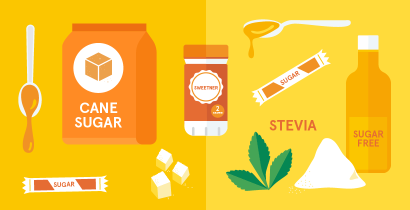
Sugars: Addressing Common Questions
Found in 03 March 2026Sugars are common components of our diets. They are found in a wide range of foods and drinks, both naturally and in added form, including in fruit and fruit juices, milk and dairy products, honey, jams and marmalades, soft drinks, ready-meals, vegetable products (e.g. tomato ketchup), desserts, and other sweet…

Daily sugar intake: How many grams of sugar per day?
Found in 02 March 2026Sugars are everywhere in our diets. They are found naturally in foods or are added to various foods and drinks. Sources of sugar in our diets include fruits and fruit juices, soft drinks, honey, jams and marmalades, vegetable products (e.g., tomato ketchup), ready-meals, desserts and other sweet treats. Sugars are…

Infographics About Healthy Eating Can Spark Interest Among Unmotivated Young Adults, New EUFIC Study Finds
Found in 24 February 2026Brussels, February 24th, 2026 — Young adults who are not motivated to eat healthily can still be engaged with the right type of communication, according to new research from the European Food Information Council (EUFIC). Young adults often face unique dietary challenges, from limited resources and time constraints to social…
Events
Found in 18 February 2026Stay up to date with EUFIC’s conferences, webinars, workshops, and trainings.This page is updated throughout the year as new events are announced.

AGRIMED C: AGRIculture Management EDucation towards Climate resilience
Found in 16 February 2026AGRIMED C: AGRIculture Management EDucation towards Climate resilience
Cook2DIAbeat: Healthier Eating for Type 2 Diabetes Self-Management: Cocreating a Novel Nutrition Education Program with Culinary Medicine
Found in 16 February 2026Cook2DIAbeat: Healthier Eating for Type 2 Diabetes Self-Management: Cocreating a Novel Nutrition Education Program with Culinary Medicine
EUFIC’s Communication Lab #1 on Emulsifiers: combining consumer perceptions, scientific consensus, industrial challenges and safety expertise
Found in 09 February 2026Following the successful 2-step Communication Labs on Sweeteners (2024-2025), EUFIC hosted the Communication Lab #1 on Emulsifiers on 25 November 2025 to address EU’s food system’s current communication trends surrounding emulsifiers. The interactive open webinar session featured 4 experts and a qualified audience (184 registered, 60% from industry, 20% from…
Grunert, K. G., & Hieke, S. (2025). “Chapter 12: Nudging for more sustainable and healthy food choices: a dual-processing approach with a time perspective”.
Found in 06 February 2026In The Elgar Companion to Consumer Behaviour and the Sustainable Development Goals. Cheltenham, UK: Edward Elgar Publishing. (pp. 191–204).
European Food Information Council. (2025). Plant-Based dairy Alternatives: Perspectives from nutrition professionals in Spain.
Found in 06 February 2026In www.eufic.org. Retrieved February 3, 2026.
European Food Information Council. (2025). Plant-Based dairy Alternatives: Perspectives from nutrition professionals in Portugal.
Found in 06 February 2026In www.eufic.org. Retrieved February 3, 2026.
Abundancia, C., Bosman, L., Capdevila, K. F., et al. (2025b). The Role of Food Information Initiatives in Bringing Microbiome Awareness into the Diet.
Found in 06 February 2026In The microbiomes of humans, animals, plants, and the environment (pp. 167–192).
Briazu, R., Bell, L., Dodd, G., et al. (2024b). The effectiveness of personalised food choice advice tailored to an individual’s socio-demographic, cognitive characteristics, and sensory preferences.
Found in 06 February 2026Appetite, 201, 107600.
Palascha, A., & Chang, B. P. (2024b). Which messages about healthy and sustainable eating resonate best with consumers with low socio-economic status?
Found in 06 February 2026Appetite, 198, 107350.
Mwisomi, E. M., Luminet, O., Chang, B., et al. (2023b). Psychosocial determinants of intentions and behaviour towards edible insects in the South-Western part of the Democratic Republic of Congo.
Found in 06 February 2026Cogent Psychology, 10(1).
Aouinait, C., Chang, B., Braun, S., et al. (2022b). Barriers and facilitators of purchasing from short food supply chains in europe: insights from a stakeholder perspective.
Found in 06 February 2026International Journal of Food Studies, 11(3), 196–207.
Sadler, C. R., Grassby, T., Hart, K., et al. (2022b). “Even We Are Confused”: A thematic analysis of professionals’ perceptions of processed foods and challenges for communication.
Found in 06 February 2026Frontiers in Nutrition, 9, 826162.
Ferrocino, I., Rantsiou, K., McClure, R., et al. (2023b). The need for an integrated multi‐OMICs approach in microbiome science in the food system.
Found in 06 February 2026Comprehensive Reviews in Food Science and Food Safety, 22(2), 1082–1103.
Profeta, A., Baune, M., Smetana, S., et al. (2021b). Consumer preferences for meat blended with plant proteins – Empirical findings from Belgium.
Found in 06 February 2026Future Foods, 4, 100088.
Timotijevic, L., Astley, S., et al. (2021b). Designing a research infrastructure (RI) on food behaviour and health: Balancing user needs, business model, governance mechanisms and technology.
Found in 06 February 2026Trends in Food Science & Technology, 116, 405–414.
Festila, A., Chrysochou, P., Hieke, S., & Massri, C. (2021b). Public sensemaking of active packaging technologies: A feature-based perspective.
Found in 06 February 2026Public Understanding of Science, 30(8), 1024–1040.
Janssen, M., at al. (2021b). Changes in food consumption during the COVID-19 pandemic: Analysis of consumer survey data from the first lockdown period in Denmark, Germany, and Slovenia.
Found in 06 February 2026Frontiers in Nutrition, 8, 635859.
Profeta, A., Baune, M., Smetana, S., et al. (2021b). Preferences of German Consumers for Meat Products Blended with Plant-Based Proteins.
Found in 06 February 2026Sustainability, 13(2), 650.
Sadler, C. R., Grassby, T., Hart, K., Raats, M., Sokolović, M., & Timotijevic, L. (2021b). Processed food classification: Conceptualisation and challenges.
Found in 06 February 2026Trends in Food Science & Technology, 112, 149–162.
Ryan, M., Schloter, M., Berg, G., et al. (2020). Development of Microbiome Biobanks – Challenges and opportunities.
Found in 06 February 2026Trends in Microbiology, 29(2), 89–92.
D’Hondt, K., Kostic, T., McDowell, R., Eudes, F., Singh, B. K., Sarkar, S., Markakis, M., Schelkle, B., Maguin, E., & Sessitsch, A. (2021). Microbiome innovations for a sustainable future.
Found in 06 February 2026Nature Microbiology, 6(2), 138–142.
Baungaard, C., Kok, K. P., Boer, A. C. D., et al. (2021). FIT4FOOD2030: Future‐proofing Europe’s Food Systems with Tools for Transformation and a Sustainable Food Systems Network.
Found in 06 February 2026Nutrition Bulletin, 46(2), 172–184.
Tetens, I., Birt, C. A., Brink, E., et al. (2020). Food-Based Dietary Guidelines – development of a conceptual framework for future Food-Based Dietary Guidelines in Europe:
Found in 06 February 2026British Journal of Nutrition, 124(12), 1338–1344.
Neubig, C. M., Vranken, L., Roosen, J., et al. (2020). Action-related information trumps system information: Influencing consumers’ intention to reduce food waste.
Found in 06 February 2026Journal of Cleaner Production, 261, 121126.
Macready, A. L., et al. (2020). Consumer trust in the food value chain and its impact on consumer confidence: A model for assessing consumer trust and evidence from a 5-country study in Europe.
Found in 06 February 2026Food Policy, 92, 101880.
Berg, G., Rybakova, D., Fischer, D., et al. (2020). Microbiome definition re-visited: old concepts and new challenges.
Found in 06 February 2026Microbiome, 8(1), 103.
Lockyer, S., Cade, J., Darmon, N., et al. (2020). Proceedings of a roundtable event ‘Is communicating the concept of nutrient density important?’
Found in 06 February 2026Nutrition Bulletin, 45(1), 74–97.
Schelkle, B., & Galland, Q. (2020). Microbiome Research: Open Communication today, Microbiome applications in the future.
Found in 06 February 2026Microorganisms, 8(12), 1960.
Hung, Y., Hieke, S., Grunert, K. G., & Verbeke, W. (2019). Setting policy priorities for Front-of-Pack health claims and symbols in the European Union: expert consensus built by using a Delphi method.
Found in 06 February 2026Nutrients, 11(2), 403.
Hieke, S., & Grunert, K. G. (2019). Measuring the effects of health claims and symbols: The CLYMBOL methodological toolbox.
Found in 06 February 2026In S. Astley (Ed.), Health claims and food labelling (pp. 94–106). The Royal Society of Chemistry.
Pravst, I., Kušar, A., Miklavec, K., et al. (2019). Use of nutrition and health claims and symbols on prepacked foods in Europe: From consumer exposure to public health implications.
Found in 06 February 2026In S. Astley (Ed.), Health claims and food labelling (pp. 79–93). The Royal Society of Chemistry.
Jeruszka-Bielak, M., Kollajtis-Dolowy, A., et al. (2018). Are Nutrition-Related knowledge and Attitudes reflected in lifestyle and health among elderly people? A study across five European countries.
Found in 06 February 2026Frontiers in Physiology, 9, 994.
Hartmann, C., Hieke, S., Taper, C., & Siegrist, M. (2017). European consumer healthiness evaluation of ‘Free-from’ labelled food products.
Found in 06 February 2026Food Quality and Preference, 68, 377–388.
Hieke, S., Pieniak, Z., & Verbeke, W. (2017). European consumers’ interest in nutrition information on (sugar-free) chewing gum.
Found in 06 February 2026Food Quality and Preference, 64, 172–180.
Grunert, K. G., Hieke, S., & Juhl, H. J. (2017). Consumer wants and use of ingredient and nutrition information for alcoholic drinks: A cross-cultural study in six EU countries.
Found in 06 February 2026Food Quality and Preference, 63, 107–118.
Timotijevic, L., Acuna‐Rivera, M., et al. (2018). Adolescents’ Perspectives on Personal and Societal Responsibility for Childhood Obesity — The Study of Beliefs through ‘Serious’ Game (PlayDecide).
Found in 06 February 2026Children & Society, 32(5), 405–416.
Sanz, Y., Romaní-Perez, M., Benítez-Páez, A., et al. (2018). Towards microbiome-informed dietary recommendations for promoting metabolic and mental health: Opinion papers of the MyNewGut project.
Found in 06 February 2026Clinical Nutrition, 37(6), 2191–2197.
Sadler, M. (2017). Foods, Nutrients and Food Ingredients with Authorised EU Health Claims: Volume 3.
Found in 06 February 2026Woodhead Publishing.
Hung, Y., Grunert, K. G., Hoefkens, C., Hieke, S., & Verbeke, W. (2017). Motivation outweighs ability in explaining European consumers’ use of health claims.
Found in 06 February 2026Food Quality and Preference, 58, 34–44.